When you rent a dumpster, you are paying for space. Every cubic yard counts.
If you throw everything in haphazardly, you end up paying for “air pockets”—wasted space that could have held more debris. It is the difference between a 15-yard dumpster holding 4 pickup truck loads versus holding 6.
At Home Team Haulers, we want you to get the absolute most value out of your rental. Here is our guide to playing “Dumpster Tetris” so you can fit more junk in the bin and keep your project on budget.
Step 1: Prep Your Debris (The “Break Down” Rule)
The biggest mistake people make is throwing fully assembled items into the bin.
Cardboard Boxes: Flatten them. A constructed box is 90% air.
Furniture: Take a sledgehammer to that old dresser. A flat pile of wood takes up a fraction of the space of a standing cabinet.
Drywall: detailed in smaller sheets (2×2 or 4×4) lays flatter than giant, irregular chunks.
The 80/20 Rule: 80% of the space in a poorly packed dumpster is usually taken up by bulky items that weren’t broken down first.
Step 2: The Loading Strategy (Layering)
Don’t just toss things over the side walls! That creates a messy mound in the middle. Instead, open the swinging back door and walk your items in.
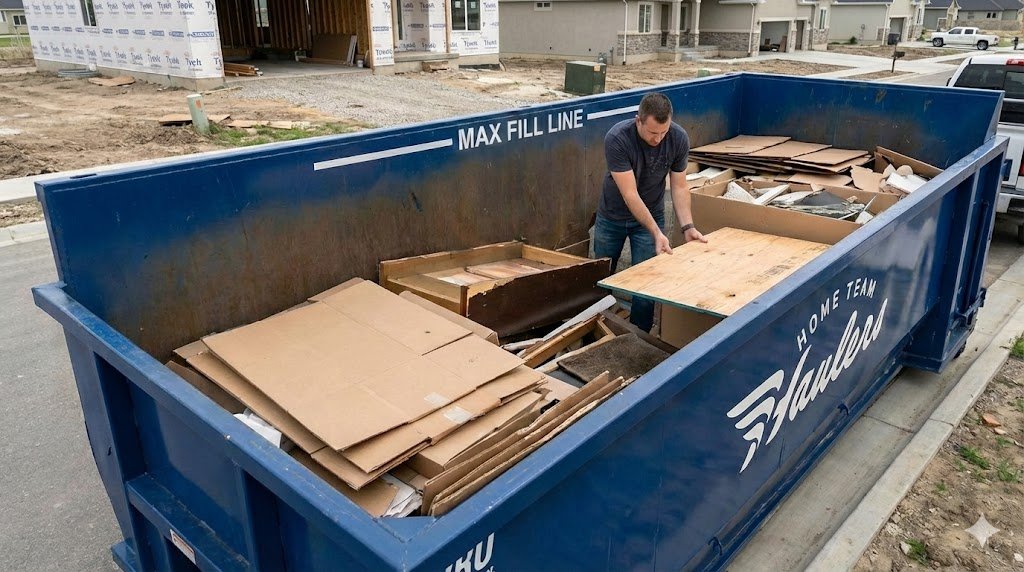
1. The Base Layer (Flat & Heavy) Start by laying flat items on the bottom floor of the dumpster. This includes:
Plywood sheets
Old flooring or carpet (rolled up)
Drywall panels
This creates a solid foundation and ensures you aren’t trying to balance heavy items on top of unstable trash later.
2. The Middle Layer (Bulky Items) Once the floor is covered, add your bulkier items. If you have a sofa or mattress, place it here. Try to stand tables on their ends or dismantle legs to slot them in tightly.
3. The Gap Fillers As you load, you will see gaps between the furniture and the wall. Use small debris—like bags of trash, loose tiles, or yard waste—to fill these cracks. This locks everything in place.
Not sure which size dumpster you need? Contact Home Team Haulers and we will help you estimate your volume.
Step 3: Respect “The Fill Line” (It is the Law)
Every roll-off dumpster has a painted line or a top rail that marks the maximum height for debris. It is tempting to pile trash up like a pyramid above the rim, but you cannot do this.
Why? It is a Legal Safety Issue.
Secured Loads: According to Utah Code 72-7-410, all cargo on a vehicle must be “securely covered” to prevent it from blowing, falling, or spilling onto the highway. If your debris sticks up above the top rail, we cannot pull the safety tarp over it.
Driver Safety: If a dumpster is overfilled, it becomes dangerous for our drivers to lift onto the truck. Debris can slide backward and damage the cab or fall onto the street.
The Consequence: If your bin is overfilled, the driver cannot pick it up. You will likely be charged a “trip fee” and asked to remove the excess trash before we can return.
Step 4: Watch Your Weight Distribution
Try to spread heavy debris (like concrete, dirt, or shingles) evenly across the floor of the dumpster.
If you load all the heavy concrete at the very back (near the door), it makes the bin dangerous to lift. If you load it all at the front, it puts too much weight on the truck’s cab. An even load is a safe load.
Get the Right Size for the Job
The best way to save money isn’t just about how you pack—it is about starting with the right size. If you pack a 15-yard bin perfectly but still have leftovers, you might need a second rental.
Need a recommendation?
Click here to contact our team
Tell us what you are throwing away (e.g., “a 10×10 kitchen demo” or “cleaning out a 2-car garage”), and we will recommend the perfect size so you only have to load it once.